When the Shovel Hits History: What Homeowners Are Discovering Beneath America's Subdivisions
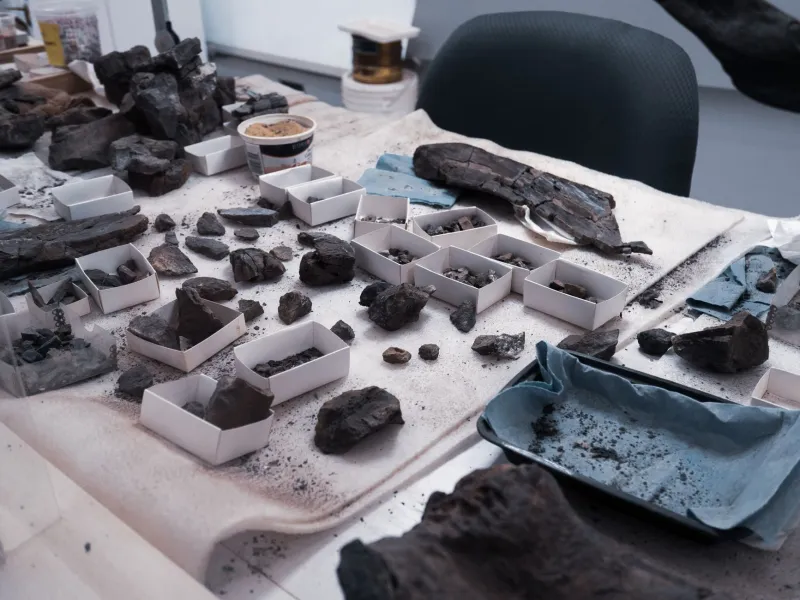
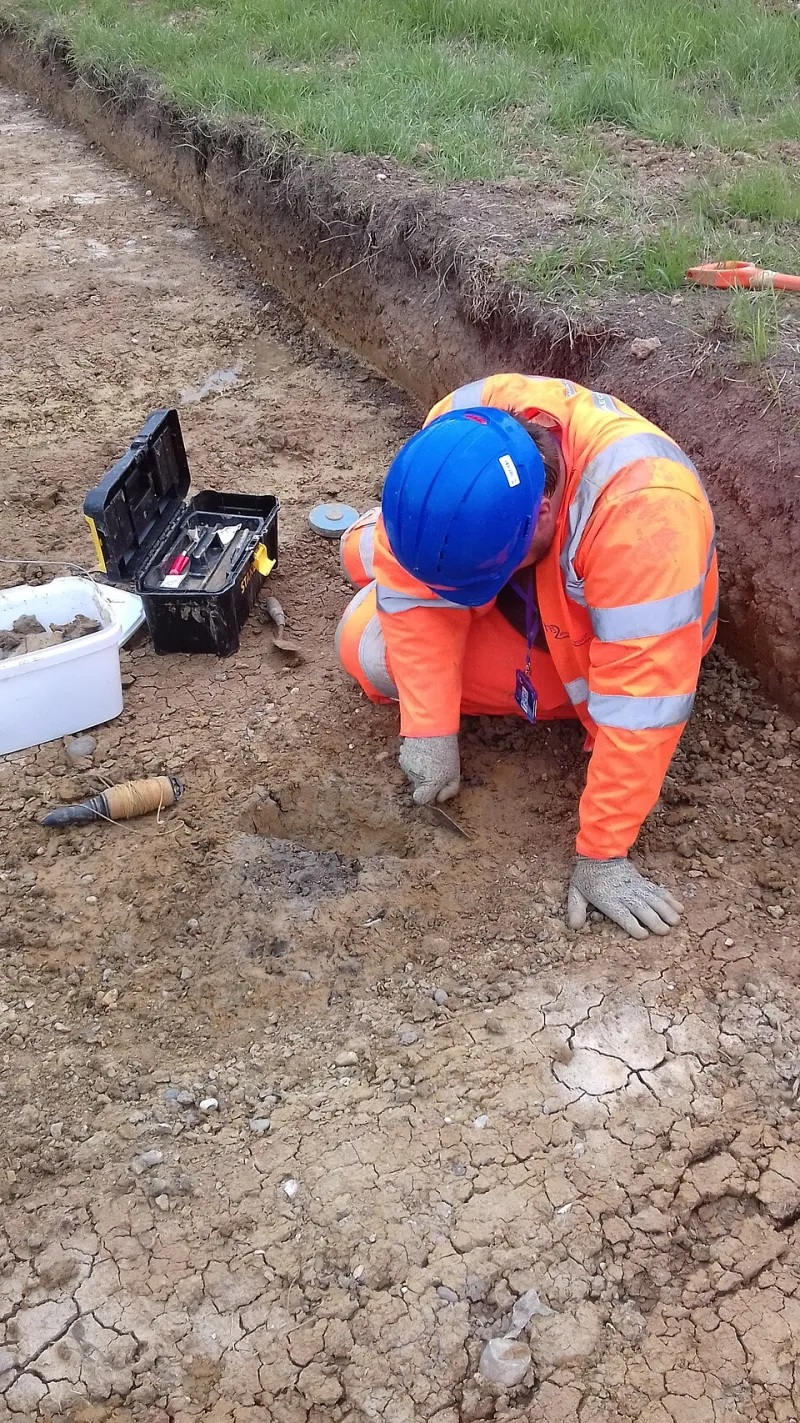
It begins, often enough, with a contractor's backhoe striking something that doesn't belong. A ceramic rim. A scatter of fire-cracked rock. A dense, darkened layer of soil that smells faintly different from everything above it. For most homeowners, the instinct is to pause — and increasingly, that pause is producing some of the most consequential archaeological data in years.
Across the United States, residential construction and renovation projects are functioning as an inadvertent network of small-scale excavations, cutting through soil profiles that professional archaeologists have rarely had reason — or legal access — to examine. The results are fragmentary, often poorly contextualized, and deeply dependent on the goodwill of the people holding the shovels. Yet they are also, in a growing number of cases, rewriting the local histories of communities that assumed they had little left to find.
The Archaeology No One Planned
Archaeological survey work in the United States has historically concentrated on areas facing imminent development pressure or on sites already listed in state and federal registers. Residential neighborhoods — particularly older suburbs that absorbed farmland and woodlots during the postwar building boom — have largely fallen outside that institutional gaze. The assumption, rarely examined, was that the construction of those neighborhoods had already destroyed whatever might have been there.
That assumption is proving incomplete. Foundation repairs, pool installations, and basement expansions frequently penetrate to depths that mid-twentieth-century construction crews never reached. A standard ranch house from 1958 may have been set on footings that disturbed only the uppermost eighteen inches of soil. The features and deposits below — hearths, refuse pits, post molds, buried agricultural soils — have sometimes remained untouched for centuries.
State archaeologists in Connecticut, Virginia, and Ohio have each documented cases in the past decade where homeowner-reported finds led to the identification of previously unrecorded sites: a seventeenth-century farmstead boundary, a late Woodland period camp, a colonial-era trash deposit containing imported English ceramics alongside locally produced Indigenous wares. None of these sites appeared in any registry. None would have been found through conventional survey.
Building a Language Between Homeowners and Scientists
The practical challenge is formidable. Archaeology operates on documentation, spatial context, and stratigraphic sequence. A homeowner who pulls a projectile point from a pile of excavated soil has, however unintentionally, severed that object from the data that would make it scientifically meaningful. The artifact survives; the information surrounding it does not.
Addressing this problem has required archaeologists to think carefully about communication. Several state historic preservation offices have developed rapid-response protocols that dispatch a professional to a residential site within twenty-four to forty-eight hours of a reported find. Organizations including the Archaeology Conservancy and various university field schools have piloted programs that train homeowners to photograph, GPS-tag, and temporarily halt work when unexpected materials appear.
These programs rest on a fundamental premise: that most people, when told they may have found something genuinely rare, will cooperate. The evidence suggests that premise is largely correct. Homeowners who contact archaeologists tend to be motivated by curiosity and a sense of civic participation. They are not, in the main, looking to profit from what they have found. What they often want is a story — an explanation of what they have uncovered and what it means for the place where they live.
That desire for narrative is something archaeologists can work with.
What the Artifacts Are Saying
The finds themselves are instructive in ways that extend beyond individual sites. Taken together, the residential discoveries of the past two decades are beginning to suggest that pre-contact settlement patterns in many parts of the eastern United States were denser, more varied, and more persistent than earlier models allowed.
In suburban areas outside Philadelphia, pottery recovered from homeowner excavations has been attributed to multiple successive occupations spanning roughly two thousand years. In the outer ring suburbs of Chicago, isolated lithic scatters — concentrations of chipped stone debitage left behind by tool manufacture — have appeared in backyards separated by several city blocks, hinting at a landscape of repeated seasonal use rather than the sparse, transient occupation that earlier accounts assumed.
Early colonial-period evidence is equally revealing. The material record of seventeenth- and eighteenth-century domestic life in America is heavily skewed toward sites that were formally documented — estates, taverns, public buildings. The ordinary farmstead, the tenant cottage, the small kitchen garden, have left behind fewer records and have attracted less systematic excavation. Residential renovation is beginning to fill that gap, producing assemblages that illuminate how common households provisioned themselves, managed waste, and organized domestic space across the colonial period.
Property Rights and the Limits of Collaboration
The legal landscape governing these discoveries is, to put it plainly, complicated. In the United States, artifacts found on private property generally belong to the landowner. Federal statutes such as the Archaeological Resources Protection Act and the Native American Graves Protection and Repatriation Act apply only to federal and tribal lands; they offer no mechanism for compelling documentation or preservation on private lots. State laws vary considerably, and most provide limited authority to intervene in residential contexts absent an imminent threat to human remains.
This means that the entire framework for documenting residential discoveries depends on voluntary cooperation — a fragile foundation for scientific preservation. When homeowners decline to pause construction, or choose not to report what they have found, the archaeological record is diminished without recourse. Some professionals are candid about the tension this creates. The science is entirely contingent on the goodwill of people who have no legal obligation to provide it.
There are also legitimate questions about the burdens that discovery can impose. A homeowner who contacts authorities about an unexpected find may face construction delays, additional permit requirements, or — in rare cases involving human remains — extended legal proceedings. These are not trivial costs. Advocacy for more responsive and homeowner-friendly reporting systems has grown among archaeologists who recognize that punitive or bureaucratic responses discourage the very behavior the field depends on.
A New Model for Urban Archaeological Practice
Some researchers are beginning to argue that residential neighborhoods should be treated not as archaeological dead zones but as active, if unconventional, field environments. This would require sustained investment in public outreach, simplified reporting infrastructure, and mechanisms for compensating homeowners who voluntarily accommodate documentation work.
A handful of municipalities have moved in this direction. In several New England cities, historical commissions have partnered with local universities to maintain standing agreements with licensed contractors, ensuring that flagged discoveries are assessed quickly enough that construction schedules are not significantly disrupted. These arrangements have produced documented sites that would otherwise have been lost entirely.
The broader principle is straightforward: the archaeological record of the United States does not end at the property line. It runs beneath lawns and driveways and poured concrete slabs, through the filled-in lots of demolished structures and the graded terraces of mid-century subdivisions. Accessing that record will require the field to meet homeowners where they are — not with bureaucratic demands, but with the kind of genuine partnership that makes discovery feel like a shared endeavor rather than an institutional obligation.
The shovel, after all, does not know who is holding it.