What Charcoal Remembers: The Science Rewriting North America's Fire History
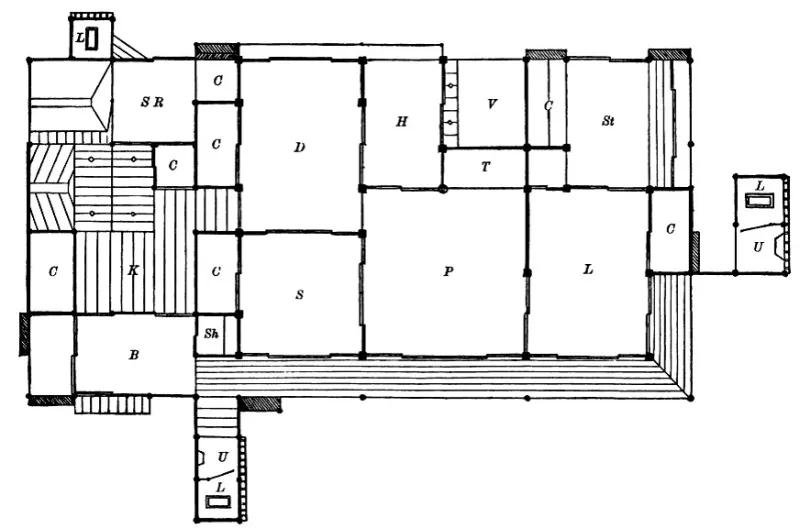
Photo: Edward S. Morse, Public domain, via Wikimedia Commons
A Science Built on Ash
To the untrained eye, charcoal recovered from an archaeological excavation looks like little more than debris — the unremarkable residue of fire. To an anthracologist, however, each fragment is a compressed archive. The cellular structure of wood survives the combustion process with remarkable fidelity, allowing specialists to identify the species of tree that burned, the season in which it was cut, and in many cases, the conditions under which it grew. When aggregated across dozens of sites and thousands of years, these fragments begin to compose something extraordinary: a detailed record of how ancient peoples interacted with their landscapes.
Anthracology — the systematic study of charcoal recovered from archaeological and geological contexts — has been practiced in Europe for several decades, but its application to North American sites has accelerated significantly in the past twenty years. The results are reshaping foundational assumptions about pre-contact environments, Indigenous land use, and even the pace of climate change in the continent's deep past.
Reading the Wood Grain Backward
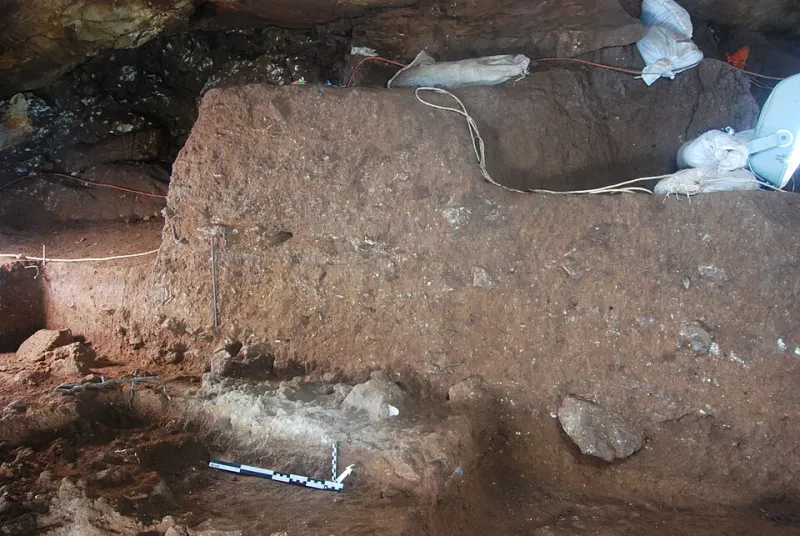
The methodology begins at the excavation itself. Soil samples are collected from hearths, fire pits, burned structural remains, and even diffuse ash layers that suggest more dispersed burning events. These samples are processed through flotation — a technique in which soil is suspended in water, allowing lighter organic material, including charcoal, to rise to the surface and be skimmed off for analysis.
In the laboratory, each recovered fragment is fractured along its three anatomical planes and examined under high-powered microscopy. The resulting cross-sections reveal the arrangement of cells, vessels, and rays that are unique to individual tree species — sometimes even distinguishing between closely related genera. This identification process allows researchers to reconstruct what botanists call the "wood charcoal assemblage" of a site: a portrait of the plant communities that surrounded a settlement and, critically, which species its inhabitants chose to burn and why.
Those choices were rarely arbitrary. Across numerous North American sites, anthracological studies have demonstrated that ancient communities selected specific wood types for specific purposes — dense hardwoods for sustained cooking fires, aromatic species for ceremonial contexts, fast-burning softwoods for signaling or rapid heating. This behavioral fingerprint, embedded in the charcoal record, speaks to a sophisticated understanding of local ecology that challenges any narrative of passive habitation.
Dismantling the Myth of the Pristine Wilderness
Perhaps the most consequential contribution of anthracological research in North America has been its role in dismantling what scholars sometimes call the "pristine wilderness" myth — the colonial-era fiction that European settlers arrived to find an untouched, unmanaged landscape. This notion, which served as a rhetorical foundation for dispossession, is contradicted by a growing body of physical evidence, and charcoal analysis sits at the center of that evidentiary challenge.
Research across the Great Plains, the Pacific Northwest, and the Eastern Woodlands has revealed consistent patterns of deliberate, landscape-scale burning extending back thousands of years. Indigenous communities used controlled fire to clear undergrowth, encourage the growth of food plants, manage game habitat, and maintain travel corridors through dense forest. The charcoal layers preserved in lake sediments and archaeological deposits from these regions tell a story of active, intentional fire ecology — one that shaped the very landscapes European colonizers mistook for natural wilderness.
In the Pacific Northwest, for example, sediment core analysis combined with archaeological charcoal assemblages has documented recurring burn cycles that correlate with known patterns of camas prairie management practiced by Coast Salish and other nations. The open, parklike prairies that early American settlers described with admiration were not accidents of geography. They were the product of generations of careful stewardship, maintained by fire.
This reframing carries significant implications not only for historical understanding but for contemporary land management policy. As federal agencies and tribal nations negotiate co-management agreements for public lands, the anthracological record provides empirical grounding for Indigenous ecological knowledge that was long dismissed or ignored by Western scientific institutions.
Climate Signals in Ancient Combustion
Beyond questions of human behavior, charcoal analysis has emerged as a valuable proxy for reconstructing past climate conditions. The species composition of charcoal assemblages shifts in response to environmental change — drought-adapted species appearing in greater frequency during arid periods, moisture-loving trees dominating during wetter intervals. When these patterns are correlated with other paleoclimate indicators such as pollen records and isotopic data from lake sediments, researchers can build increasingly precise reconstructions of regional climate variability over centuries and millennia.
This is particularly valuable for understanding how ancient communities responded to environmental stress. A site in the American Southwest, for instance, may show a transition in charcoal assemblages from high-elevation conifer species to lower-elevation shrubs, suggesting that as drought intensified, inhabitants were ranging farther and into different ecological zones to gather fuel. Combined with evidence of changing settlement patterns and agricultural strategies, such data can illuminate the relationship between climate disruption and social reorganization in ways that neither environmental nor archaeological data could achieve independently.
In this sense, anthracology functions as a bridge discipline — connecting the material record of human activity with the longer rhythms of ecological and climatic history. It is a reminder that human societies have always been embedded in natural systems, responsive to forces larger than themselves, and resourceful in ways that conventional historical narratives have consistently underestimated.
The Urgency of Preservation
Despite its considerable promise, anthracological research in North America faces persistent challenges. Organic materials are poorly preserved at many sites, particularly in humid environments where microbial activity accelerates decomposition. Development pressure, agricultural disturbance, and the ongoing effects of climate change — including the very wildfires that anthracologists study — continue to damage or destroy the sites that hold this evidence.
There is also a methodological challenge rooted in collaboration. The most meaningful anthracological research in Indigenous contexts requires genuine partnership with tribal communities, whose oral traditions and ecological knowledge can provide interpretive context that laboratory analysis alone cannot supply. Several ongoing projects in the Pacific Northwest and the Great Lakes region have modeled what this collaboration can look like when conducted respectfully and on terms set by tribal partners — but such arrangements remain the exception rather than the rule.
What the charcoal record ultimately demands of researchers is a willingness to listen — to the wood, to the soil, and to the communities whose ancestors lit those ancient fires. The evidence, it turns out, has been waiting in the ground all along.