Fired in Clay, Written in Trade: How Ceramic Fragments Are Redrawing the Map of Pre-Columbian America
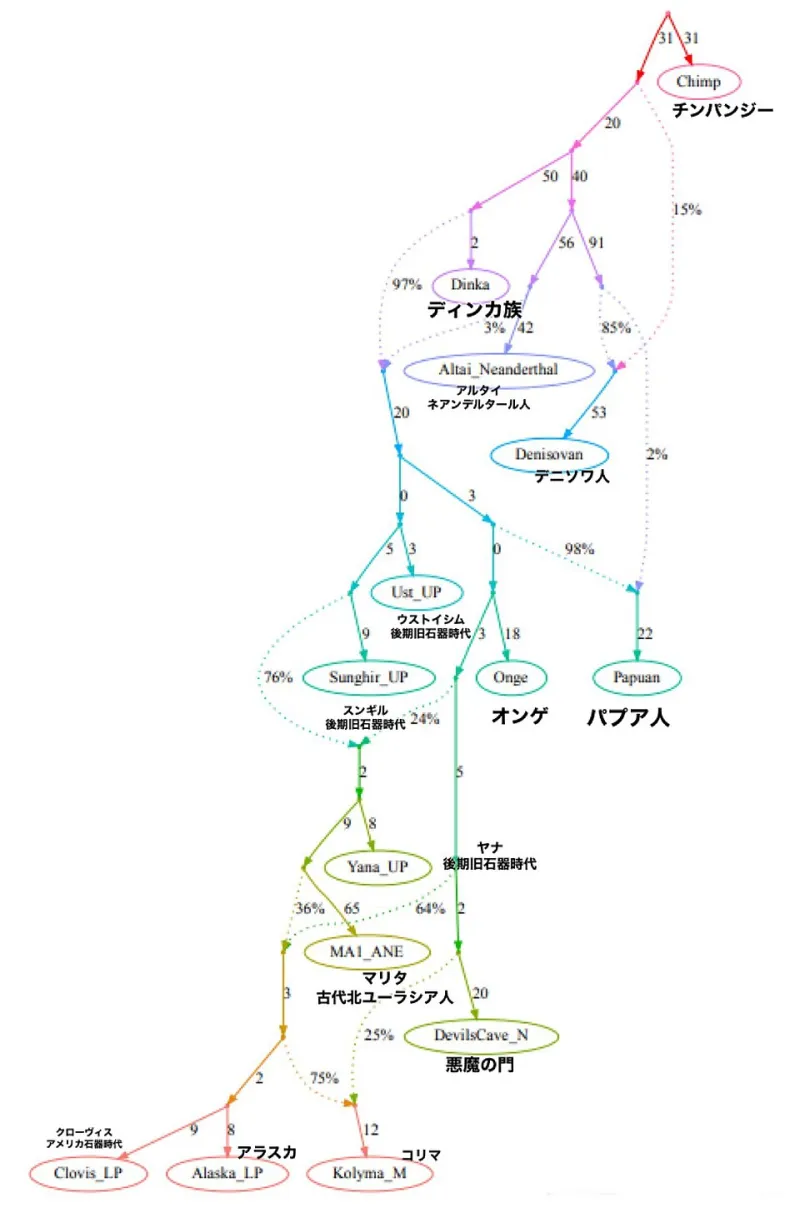
Photo: Robert Maier, Pavel Flegontov, David Reich et al. 2023, CC BY-SA 4.0, via Wikimedia Commons
A pottery shard is, at first glance, an unremarkable thing. Chipped at the edges, dulled by centuries of burial, and often no larger than a human palm, it is easy to overlook in favor of more dramatic archaeological finds — carved monuments, burial goods, or the structural remains of ancient cities. Yet it is precisely these fragments, humble and broken, that are now forcing archaeologists to reconsider everything they thought they understood about commerce and cultural exchange among pre-Columbian societies across North America.
Over the past two decades, advances in ceramic compositional analysis — particularly neutron activation analysis (NAA) and portable X-ray fluorescence (pXRF) — have given researchers the ability to identify the precise geochemical fingerprint of the clay used to manufacture a given vessel. When that fingerprint is matched against a database of regional clay sources, the results can be striking: a pot found in a village in present-day Illinois may have been made with clay sourced from hundreds of miles away in the American Southwest, or vice versa. The implications are profound.
The Chemistry of Connection
The science behind ceramic provenance analysis rests on a straightforward premise: clay deposits in different geographic regions contain distinct combinations of trace elements, including rare earth metals, that are essentially impossible to replicate through coincidence. When ancient potters shaped and fired their vessels, they unknowingly embedded a kind of chemical signature into the object — one that modern instruments can now read with considerable precision.
At the University of Missouri Research Reactor, one of the leading centers for archaeometric analysis in the United States, researchers have spent years building a reference library of clay compositions drawn from across North America. When sherds recovered from excavation sites are submitted for testing, scientists can compare their elemental profiles against this library to determine, with a high degree of confidence, where the raw material originated.
In recent years, this technique has been combined with isotopic dating methods — including thermoluminescence (TL) and optically stimulated luminescence (OSL) — to establish not only where a vessel came from, but roughly when it was made and transported. Together, these tools are producing a far more detailed picture of ancient American life than surface-level typological analysis ever could.
Cahokia's Reach: A Case Study in Long-Distance Exchange
Perhaps no site better illustrates the revelatory power of ceramic analysis than Cahokia, the massive pre-Columbian urban center located near present-day Collinsville, Illinois. At its height, around 1100 CE, Cahokia was home to an estimated 10,000 to 20,000 people — making it one of the largest cities in the pre-Columbian Americas north of Mexico.
For years, archaeologists recognized that Cahokia was a regional hub, but the full extent of its commercial and cultural reach remained uncertain. Recent ceramic studies have begun to fill in that picture. Analysis of sherds recovered from Cahokia and its satellite communities has identified clay compositions consistent with sources in present-day Kansas, Oklahoma, and even parts of the Gulf Coast region. Conversely, stylistically Cahokian pottery has turned up at sites as far afield as the upper Mississippi Valley and the Tennessee River drainage.
What this suggests is not merely that goods were exchanged, but that people — craftspeople, traders, perhaps emissaries — were moving across the continent with a regularity that challenges older models of isolated, self-sufficient communities. Dr. Timothy Pauketat, an archaeologist at the University of Illinois who has spent decades studying Cahokia, has described the site as a kind of ancient metropolis whose influence radiated outward in ways that are only now becoming fully visible.
Tracing the Turquoise Road Through Ceramics
The American Southwest offers another compelling case. The ancestral Pueblo peoples of what is now New Mexico and Arizona have long been known to have participated in trade networks extending into northern Mexico, particularly through the exchange of turquoise and macaw feathers. But ceramic evidence is now suggesting that these networks were considerably more extensive — and more sophisticated — than previously appreciated.
Excavations at Chaco Canyon, the ceremonial and administrative center of the Ancestral Puebloan world between roughly 850 and 1150 CE, have yielded pottery whose clay signatures point to production sites scattered across a radius of more than 200 miles. Equally telling are the stylistic borrowings visible in the pottery itself: design motifs that appear to have traveled northward from Mesoamerican traditions, adapted and reinterpreted by Pueblo artisans in ways that speak to sustained, meaningful contact rather than casual encounter.
Researchers at the Crow Canyon Archaeological Center in Colorado have been particularly active in mapping these ceramic connections, using pXRF analysis in the field to rapidly assess large assemblages of sherds. Their work is contributing to an emerging consensus that the pre-Columbian Southwest was, in effect, a node within a much larger web of exchange that stretched from the Pacific coast to the Great Plains.
Why Isolation Was the Default Assumption
It is worth asking why the prevailing narrative for so long emphasized isolation over interconnection. Part of the answer lies in the history of the discipline itself. Early American archaeology, conducted largely by non-indigenous researchers working within a framework shaped by colonial assumptions, tended to view Native American societies as static and bounded — peoples who lived and died within circumscribed territories without the organizational capacity for large-scale commerce.
This framing was not merely intellectually convenient; it served ideological purposes, minimizing the sophistication and dynamism of pre-Columbian civilizations in ways that made dispossession easier to rationalize. The ceramic record, patient and chemically honest, is now offering a corrective.
The Significance of Interconnection
The practical implications of these findings extend well beyond academic archaeology. For Native American communities whose ancestors built and inhabited these networks, the evidence of continental-scale exchange is a source of cultural affirmation — confirmation that their forebears were not passive inhabitants of a static landscape, but active agents in a complex and deeply human story of trade, diplomacy, and shared knowledge.
For historians and educators, the revised picture demands a rethinking of how pre-Columbian North America is taught and represented. The continent was not, as textbook shorthand often implies, a mosaic of isolated cultures waiting to be connected by European contact. It was already connected — by roads and rivers, by the movement of goods and ideas, and by the quiet, enduring medium of fired clay.
The sherds continue to accumulate in laboratory drawers and archival boxes across the country. Each one is a fragment of a conversation that began long before written records, conducted in the language of trade and craft. Archaeology, at its best, is the work of learning to listen.