Where Iron Met Ambition: Unearthing America's Earliest Forges and the Metalworkers History Overlooked
Few artifacts speak as plainly as a forge. Unlike a ceremonial object or a fragment of pottery, a forge is a statement of intent: here, someone controlled fire hot enough to transform stone into metal. Across the United States, archaeologists are increasingly turning their attention to these humble installations — and what they are finding is complicating a story most Americans learned in school.
The Forge as a Historical Document
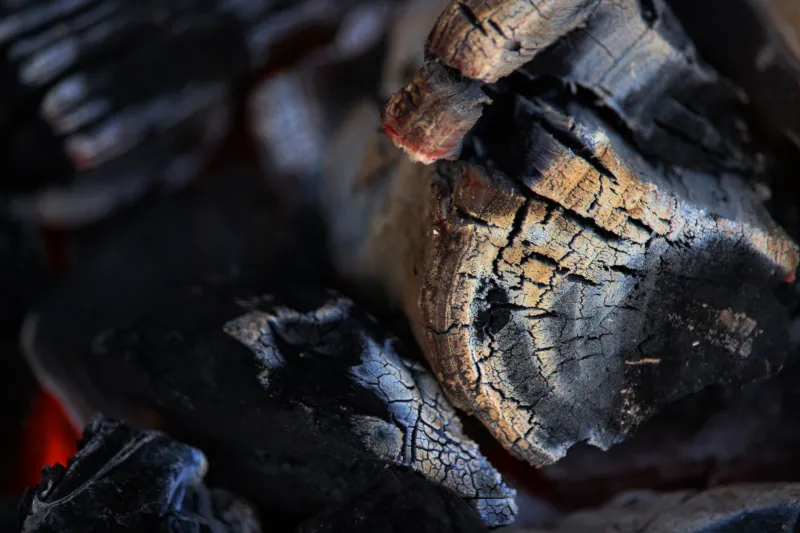
A forge preserves chemistry. When metalworkers heated ore and hammered blooms into usable stock, they left behind slag, tuyère fragments, hammer scale, and charcoal — materials that survive centuries in the soil and can be read like a laboratory notebook. Slag composition reveals the type of ore used and the temperatures achieved. Charcoal identifies the wood species workers selected for fuel. Even the arrangement of hearth stones can indicate whether a smith worked alone or within an organized workshop.
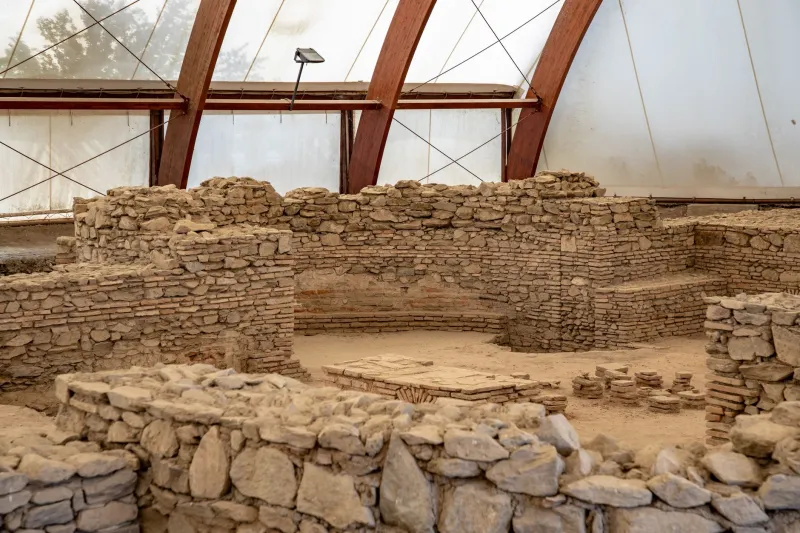
Recent excavations at Spanish colonial sites in northern Florida have documented forge installations dating to the late sixteenth and early seventeenth centuries, among the earliest confirmed iron-working contexts in what is now the United States. At the same time, fieldwork in the Upper Midwest continues to expand our understanding of Indigenous copper-working traditions that predate European contact by millennia — traditions that never smelted ore, but achieved a mastery of annealing, hammering, and heat treatment that European observers struggled to comprehend.
Copper Before Columbus
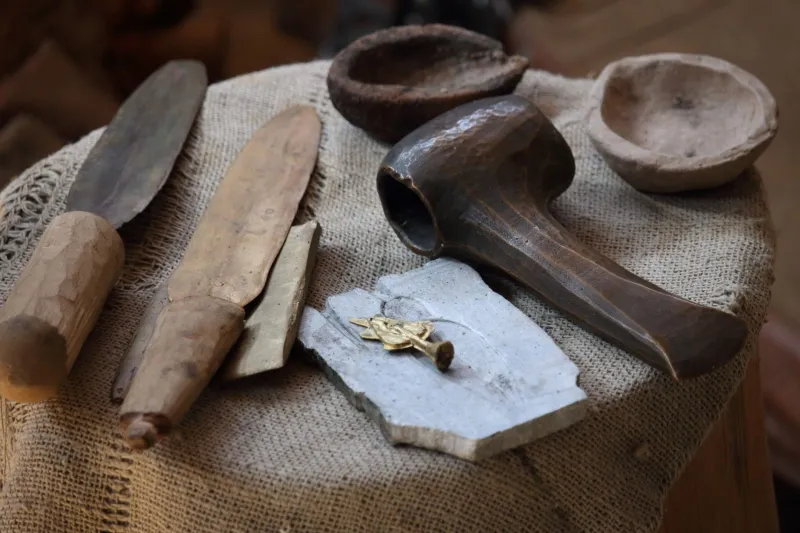
The Old Copper Complex of the Great Lakes region, spanning roughly from 4000 BCE onward, represents one of the oldest metal-working traditions in the world. Archaic-period peoples quarried raw copper from the Keweenaw Peninsula and Isle Royale, then cold-hammered and annealed it into spear points, knives, and ornaments.
For decades, popular narratives dismissed this as a lesser achievement because these communities never developed smelting or casting. That framing, archaeologists now argue, says more about Eurocentric definitions of technology than about the people themselves. Annealing copper — heating it to restore workability after hammering — requires precise fire control and an empirical understanding of how heat changes material properties. Hearths associated with copper-working sites show evidence of sustained, carefully managed temperatures. These were not casual campfires. They were tools.
Moreover, the choice not to smelt may have been deliberate. Copper in the Great Lakes tradition was often treated as a sacred, enduring substance — worked in ways that preserved its essential character rather than destroying and reforming it. The technology reflected the worldview.
Fire, Iron, and Empire in Spanish Florida
If the Great Lakes tradition shows Indigenous mastery of native metals, the colonial Southeast shows how quickly metallurgical knowledge transferred — and how unevenly it was recorded. Excavations at sites associated with Spanish missions and settlements in Florida have uncovered forges that appear to blend European design with local adaptation. In some cases, the archaeological record suggests Indigenous laborers operated and possibly modified colonial forges, acquiring ironworking skills that Spanish authorities were often reluctant to teach.
Slag analysis from these contexts is particularly revealing. Where slag indicates repeated failed smelts, researchers infer experimentation or limited access to skilled instruction. Where it shows efficient, consistent blooms, someone with real expertise stood at the anvil — and the question of who that person was becomes historically charged.
Rewriting the Narrative of American Technology
The cumulative effect of this research is a quiet correction to a long-standing assumption: that sophisticated fire-based metallurgy arrived on this continent fully formed with Europeans. The truth is messier and more interesting. Indigenous nations developed thermal technologies of remarkable precision long before contact; colonial forges became sites of cross-cultural exchange, sometimes coerced, sometimes collaborative; and the industrial forges of the later eighteenth and nineteenth centuries — from Pennsylvania iron plantations to early New England bloomeries — inherited techniques from all of these streams.
There is also an ethical dimension. Forge sites associated with enslaved and indentured metalworkers, particularly in the Mid-Atlantic and Southeast, are increasingly recognized as essential to the story of American industry. Skilled blacksmiths held in bondage produced ironwork of exceptional quality, and excavations of their workspaces are among the few places their expertise can be documented at all.
What Comes Next
Archaeometric methods — portable X-ray fluorescence, slag petrography, radiocarbon dating of hearth charcoal — are making forge archaeology more precise and less destructive. As development pressures expose more sites through salvage work, researchers anticipate a rapidly growing dataset.
The forges themselves were modest: a pit, some stones, a bellows, an anvil. But read carefully, they testify to something larger — a continuum of pyrotechnic skill on this continent stretching back thousands of years, belonging to many hands and many traditions. The fire, as it turns out, was never the property of any one people. It was always shared, and always evolving.