Deliberately Hidden, Permanently Lost? The Archaeological Search for America's Underground Railroad
History remembers the Underground Railroad as one of the most consequential acts of organized resistance in American history. Between roughly 1780 and 1865, an estimated 100,000 enslaved people escaped bondage through a loosely coordinated network of safe houses, sympathetic conductors, and carefully guarded routes stretching from the Deep South to Canada. The historical record — letters, memoirs, abolitionist pamphlets, and oral histories — confirms the network's existence in considerable detail. What it does not provide, and what archaeology has thus far failed to supply, is physical proof of where, precisely, those stations were.
For researchers working at the intersection of historical documentation and material culture, this absence is not merely frustrating. It is, in its own way, a testament to the extraordinary discipline of the people who built the network in the first place.
The Architecture of Erasure
Understanding why Underground Railroad sites are so difficult to locate requires understanding how deliberately they were concealed. Conductors — both free Black activists and white abolitionists — operated under the constant threat of federal prosecution, particularly after the Fugitive Slave Act of 1850 dramatically expanded the legal reach of slaveholders into Northern states. Written records were kept to an absolute minimum. Routes changed frequently. Safe houses were rarely identified as such in any document that might survive a raid or a search.
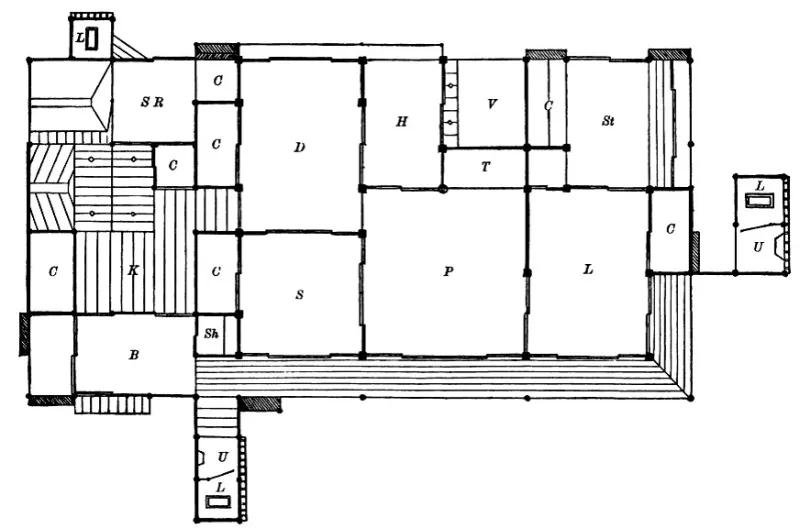
The physical modifications that sheltered freedom-seekers were equally designed for plausible deniability. Hidden rooms were constructed within existing structures in ways that would not register as unusual to a casual observer — a false wall behind a pantry, a crawl space beneath a root cellar, a concealed door framed within ordinary cabinetry. These were not grand architectural statements. They were functional, minimal, and deliberately forgettable.
This design philosophy created a profound challenge for subsequent generations. Unlike the monumental architecture of, say, a Roman fort or a pre-Columbian ceremonial complex, Underground Railroad modifications were engineered to disappear into the fabric of ordinary domestic life. Many have done exactly that.
What Archaeology Has — and Has Not — Found
The number of sites formally documented as Underground Railroad stations runs into the hundreds across states like Ohio, Pennsylvania, Indiana, and New York. Yet rigorous archaeological verification of these claims remains exceptionally rare. The Levi Coffin House in Fountain City, Indiana — one of the network's most celebrated stations — is among the few sites where structural evidence has been examined with any systematic archaeological attention. Even there, the physical record is fragmentary.
A significant complication is the problem of oral tradition versus material evidence. Many sites carry powerful community histories identifying them as former stations, histories passed down across generations with genuine conviction. Archaeology, however, demands a different standard of proof. A root cellar is a root cellar until the material record — artifact assemblages, construction chronology, spatial analysis — contextualizes it as something more. In the absence of datable materials directly associated with clandestine use, even the most compelling architectural anomaly remains ambiguous.
There is also the uncomfortable reality of deliberate post-war erasure. After the Civil War, some station operators actively removed or modified the physical evidence of their activities, partly from lingering caution, partly because what had been a life-or-death necessity now seemed, to some, an embarrassing relic of a divided nation they wished to put behind them.
New Methods, New Possibilities
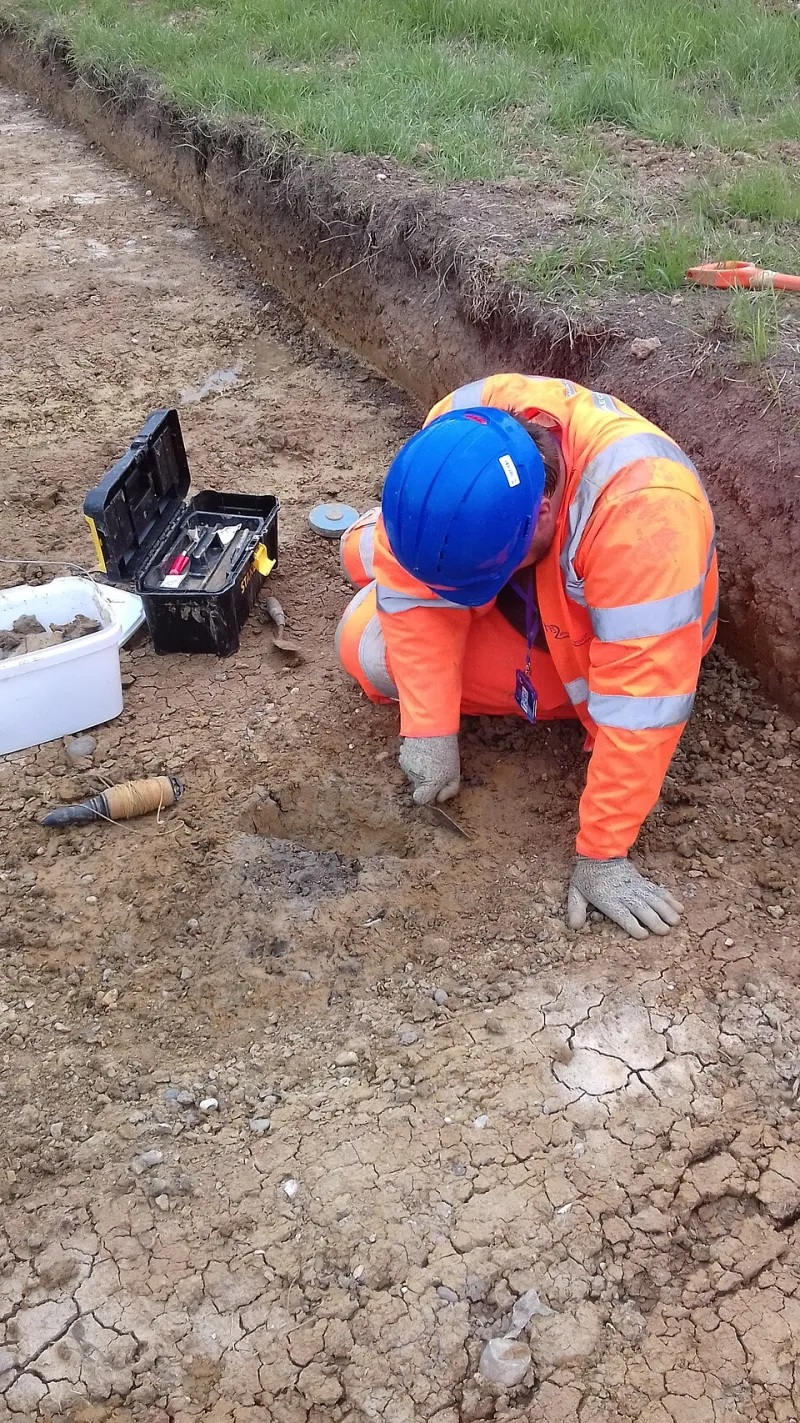
The same technological advances reshaping archaeological practice across other domains are now being applied, cautiously, to Underground Railroad research. Ground-penetrating radar has been deployed at several suspected station sites in the Ohio River Valley, where the density of historical documentation is highest. The results have been mixed but not without promise. At one private residence in southwestern Ohio — the owners of which requested anonymity pending further study — GPR surveys identified a subsurface void beneath a nineteenth-century outbuilding that does not correspond to any known structural feature on the property's historical plats. Excavation has not yet been authorized.
LiDAR, the laser-mapping technology that has transformed the study of Maya and other densely canopied archaeological landscapes, has more limited application in this context, given that most suspected stations are domestic structures in developed suburban or rural settings rather than overgrown wilderness sites. However, researchers at several universities have begun experimenting with close-range photogrammetric scanning of standing structures, creating three-dimensional models that can reveal construction anomalies invisible to the naked eye — subtle framing inconsistencies, patched wall sections, floor joists that don't quite align with the room above them.
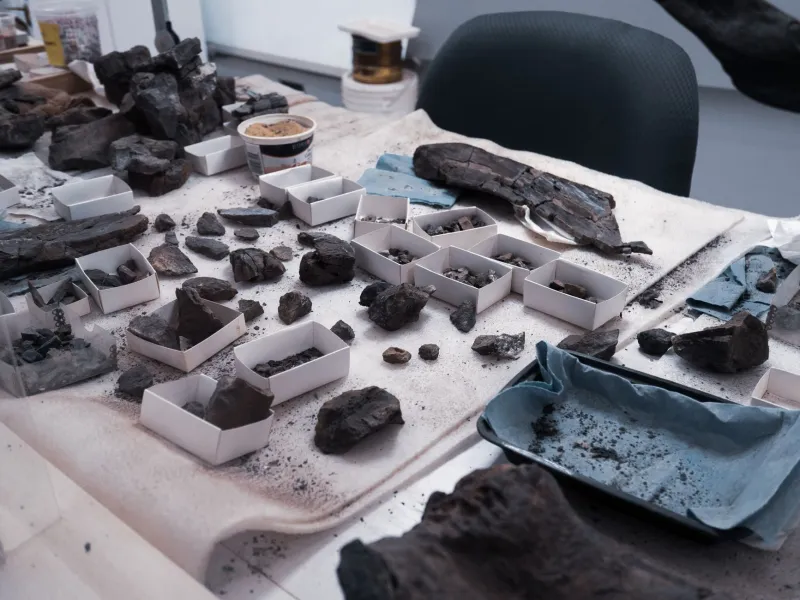
Chemical analysis of soil samples from suspected concealment spaces represents another frontier. Bioarchaeologists have demonstrated that human occupation of enclosed spaces leaves detectable chemical signatures — elevated phosphates, traces of organic compounds consistent with human biological activity — that can persist for well over a century under the right soil conditions. Applying these methods to suspected Underground Railroad sites is labor-intensive and requires careful baseline comparison, but early pilot studies suggest the approach is viable.
The Ethics of the Search
Not everyone in the research community agrees that aggressive archaeological investigation of these sites is the right course of action. A growing number of scholars — many of them Black historians and community preservationists with deep ties to the descendants of freedom-seekers — have raised pointed questions about who controls the narrative of Underground Railroad archaeology and to what ends the physical evidence, once found, will be deployed.
The concern is not merely academic. Several high-profile cases in recent years have involved property developers invoking the ambiguity of Underground Railroad site identification to proceed with demolition of historically significant structures. Without formal archaeological documentation, preservation advocates have limited legal standing to intervene. Yet formal investigation requires access, funding, and institutional involvement that communities may not trust or welcome.
There is also a deeper philosophical tension. The Underground Railroad succeeded because it was invisible. To excavate it, document it, and install interpretive signage above it is, in some sense, to complete the work of exposure that slaveholders and federal marshals never managed to accomplish. Whether that exposure serves the memory of those who risked everything to remain hidden is a question that archaeology alone cannot answer.
Reading Silence as Evidence
Perhaps the most intellectually honest position available to researchers is one that treats the absence of evidence not as a failure of the archaeological record, but as a form of evidence in itself. The deliberate, systematic erasure of physical traces is itself a historical act — one that speaks to the ingenuity, discipline, and courage of the people who built and maintained the network.
Archaeology has long grappled with the recovery of voices that were never meant to be heard by those in power. The material culture of enslaved communities, recovered painstakingly from plantation sites across the South over the past several decades, has fundamentally altered historical understanding of antebellum life. Underground Railroad archaeology faces a different but related challenge: recovering the traces of people who were not merely unheard, but who actively, brilliantly ensured that no trace could be followed.
The search continues. And in the searching, something important is already being learned — not only about the physical geography of American freedom, but about the lengths to which human beings will go to protect one another from the worst that history has to offer.