The Ground Beneath Our Feet: What Suburban Expansion Is Accidentally Revealing About America's Past

Photo by Photo by Troy Mortier on Unsplash on Unsplash
A Discovery No One Planned For
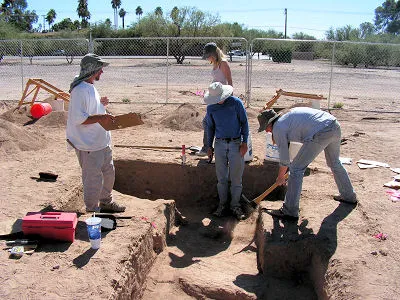
In the spring of 2021, utility crews laying fiber-optic cable through a subdivision outside Nashville, Tennessee, struck what appeared to be compacted shell and bone roughly eighteen inches below the surface. Work halted. A state archaeologist was called. What emerged over the following weeks was a midden — a refuse deposit — associated with a Mississippian-period settlement dating to approximately 900 CE. The neighborhood had been built directly atop it. No one had known it was there.
This kind of encounter is neither rare nor isolated. Across the United States, the machinery of suburban growth — backhoes, pile drivers, drainage trenchers — is punching through layers of history that formal survey methods never recorded. The sites being exposed range in character from pre-contact Indigenous settlements and Civil War encampments to eighteenth-century farmsteads and the unmarked graves of enslaved individuals. What unites them is the manner of their discovery: accidental, urgent, and almost always inconvenient to someone's construction schedule.
The question of what happens next — legally, ethically, and practically — reveals a system under considerable strain.
The Legal Framework and Its Limits
Federal law does provide some protection for archaeological resources, but its reach is narrower than many Americans assume. The National Historic Preservation Act of 1966 requires federal agencies to consider the impact of federally funded or permitted projects on historic properties. The Archaeological Resources Protection Act of 1979 criminalizes the excavation or removal of archaeological resources from federal and tribal lands without a permit. And the Native American Graves Protection and Repatriation Act of 1990 mandates consultation with tribal nations when human remains or sacred objects are discovered on federal or tribal territory.
The critical gap in this framework is the word federal. The overwhelming majority of suburban construction in the United States takes place on private land, where these statutes offer limited or no protection. State laws vary enormously. A handful of states — California, Maryland, and New Mexico among them — have enacted relatively robust protections requiring archaeological assessments before ground disturbance in sensitive zones. Many others have no such requirements at all. In those jurisdictions, a developer who encounters a pre-contact site on private property is under no legal obligation to stop work, report the find, or allow any investigation.
The result is a patchwork system that protects some sites by geography and others by accident.
When Chance Is the Only Early Warning System
Archaeologists frequently describe the current approach to suburban development as reactive rather than preventive. Phase I archaeological surveys — the standard tool for identifying subsurface resources before construction — are typically required only when federal permits or funding are involved. For purely private projects, they are voluntary, and developers have little financial incentive to commission them.
This creates a dependency on what researchers sometimes call "inadvertent discovery" — the moment a machine operator notices something unusual and has the presence of mind to stop. That moment is far from guaranteed. Construction crews work under significant time and cost pressure. Supervisors may not recognize archaeological material for what it is. And in some documented cases, workers have reported being discouraged from reporting finds that might delay a project.
Dr. Lynne Sebastian, a former New Mexico State Historic Preservation Officer, has written that the United States effectively operates on a "discovery-and-response" model for private-land archaeology — meaning that the preservation of any given site depends heavily on luck. The Nashville midden survived its initial encounter because a crew supervisor happened to recognize the shell matrix as potentially significant. Countless others have not.
The Human Stakes of What Is Lost
The archaeological record embedded beneath American suburbs is not merely a collection of objects. It is a spatial document — a record of how people organized their lives, managed their resources, buried their dead, and related to the land over millennia. When a bulldozer removes that context without documentation, the information is not simply displaced. It is destroyed.
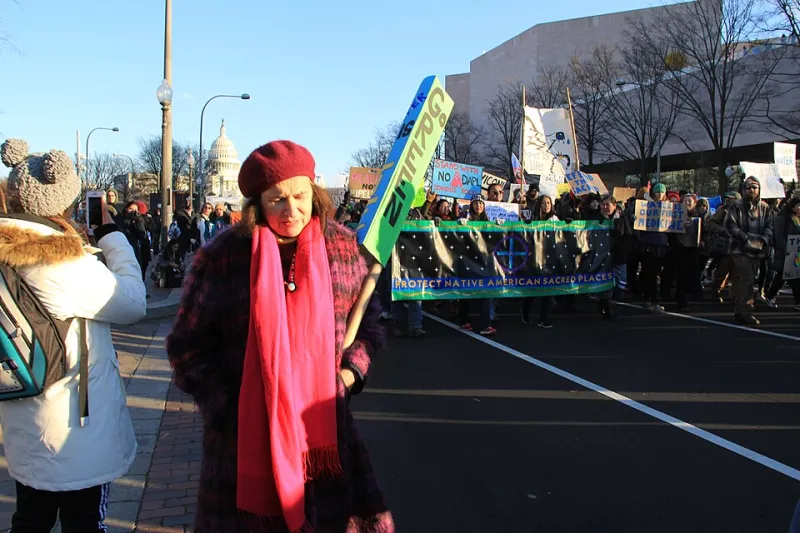
For Indigenous communities, this loss carries a dimension that transcends academic concern. Many tribal nations maintain living connections to landscapes that are now subdivisions, strip malls, and highway interchanges. When a Mississippian midden or a Haudenosaunee longhouse site is obliterated without consultation, it represents not only the erasure of material culture but the severing of a relationship between a community and its ancestral territory.
Tribal Historic Preservation Officers — positions established under the National Historic Preservation Act — are authorized to consult on federal undertakings, but again, private development largely falls outside this framework. Some tribes have pursued bilateral agreements with state agencies or large developers to secure notification rights, but these arrangements are informal and inconsistent.
What Responsible Development Can Look Like
Not every story in this space is one of loss. A growing number of developers, particularly those working in historically rich corridors along the Eastern Seaboard and in the Southwest, have begun incorporating archaeological assessment into their standard pre-construction protocols — not because the law requires it, but because the reputational and legal risks of a high-profile discovery midproject have proven costly.
In Virginia, several counties have formalized agreements with the state's Department of Historic Resources to require Phase I surveys for residential developments above a certain acreage in areas identified as archaeologically sensitive. Maryland's "predictive model" maps areas of high archaeological probability, giving developers early guidance about where subsurface resources are likely to be concentrated.
Community archaeology programs have also demonstrated that public engagement can serve as an early-warning mechanism. When residents understand what archaeological material looks like and feel empowered to report it, the window for response widens. Several universities have partnered with local planning departments to train first responders — including utility workers and construction supervisors — in basic recognition skills.
These models are promising, but they remain the exception rather than the rule.
The Urgent Case for Systematic Reform
The United States has no national program for proactive archaeological survey of private land slated for development. It has no centralized database of known site locations accessible to local planners in real time. And it has no consistent legal standard requiring developers to halt work and seek expert consultation when archaeological material is encountered on private property.
What it does have is an accelerating pace of suburban expansion — particularly in the Sun Belt states, where archaeological resources are dense and regulatory frameworks are often weakest — and a finite, non-renewable record of human habitation that is being consumed faster than it can be documented.
The archaeological community has long argued that preservation is almost always cheaper than recovery. A Phase I survey conducted before construction begins costs a fraction of what emergency excavation, litigation, and project delays cost when a significant site surfaces mid-build. The economic case for preventive assessment is, by most analyses, sound.
What has proven more difficult to establish is the political will to require it.
Until that changes, the ground beneath America's newest neighborhoods will continue to yield its secrets one excavator bucket at a time — and the question of whether those secrets survive long enough to be read will remain largely a matter of chance.