The Right to Rest: When Indigenous Communities Choose the Earth Over the Archive
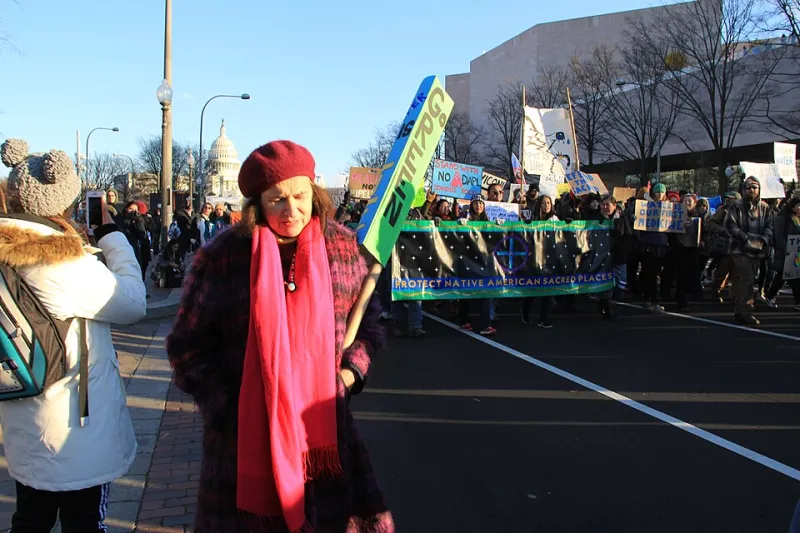
Photo: Rob87438, CC BY-SA 4.0, via Wikimedia Commons
In a small ceremony held on tribal land in the Pacific Northwest several years ago, members of a Coast Salish community gathered to bury a collection of human remains that had spent the better part of a century in a university storage facility. The bones had been excavated in the early 1900s by an academic researcher who, following the conventions of his era, treated the graves of indigenous people as scientific resources rather than sacred resting places. Now, wrapped in cedar bark and accompanied by prayers spoken in a language the deceased would have recognized, they were returned to the earth.
No press release was issued. No academic paper was forthcoming. The ceremony was, by design, an act of closure — a deliberate turning away from the institutional logic that had governed these remains for generations, and a reassertion of something older and, to the community, more fundamental: the right of the dead to remain undisturbed.
This scene, or variations of it, is playing out with increasing frequency across the United States. It is the less-publicized but deeply significant counterpart to the more visible repatriation debates that have dominated headlines in recent years. Where those debates typically focus on the return of objects and remains from museums to tribal communities, what is happening now goes a step further: tribes are conducting formal reburials, permanently removing ancestral materials from the scientific record and, in doing so, forcing a reckoning with questions that American archaeology has never fully resolved.
The Legal Architecture of Return
The foundation for this movement was laid in 1990 with the passage of the Native American Graves Protection and Repatriation Act, known as NAGPRA. The law required federal agencies and institutions receiving federal funding — which encompasses the vast majority of American museums and universities — to inventory their collections of Native American human remains, funerary objects, and sacred items, and to notify affiliated tribes of their right to request repatriation.
NAGPRA was, by any measure, a landmark piece of legislation. It represented a formal acknowledgment by the federal government that the collection of indigenous remains had been conducted without consent and in violation of the most basic principles of human dignity. Yet the law's implementation has been halting and, in many cases, deeply frustrating for tribal nations. Decades after its passage, hundreds of thousands of Native American remains are still housed in institutional collections, their repatriation delayed by bureaucratic disagreement over cultural affiliation, insufficient staffing at museums, or outright resistance from researchers reluctant to surrender access to materials they regard as scientifically irreplaceable.
In 2023, the Biden administration moved to strengthen NAGPRA's enforcement mechanisms, tightening the rules around what institutions must do before displaying or conducting research on unaffiliated remains. The revisions were welcomed by tribal advocates and criticized by some in the archaeological community — a division that reflects a tension embedded in the law itself.
Science's Claim on the Dead
The case made by researchers for retaining access to ancestral remains is not, it should be acknowledged, made in bad faith. Human skeletal material carries extraordinary amounts of information: ancient DNA can illuminate patterns of migration and population history; isotopic analysis of bone can reveal diet and geographic movement; paleopathological study can document the spread of disease and the physical toll of historical change. Some of this information, researchers argue, cannot be obtained any other way, and once remains are reburied, it is gone permanently.
Dr. Jennifer Raff, a geneticist at the University of Kansas who has written extensively on the ethics of ancient DNA research, has been among those calling for a more collaborative model — one in which tribal communities have genuine decision-making authority over whether and how their ancestors' remains are studied, rather than being consulted after research agendas have already been established. "The question isn't whether science has something to offer," she has noted in public discussions of the issue, "but who gets to decide whether that offer is accepted."
That framing — consent as the operative principle rather than scientific utility — is one that many tribal leaders find clarifying. The argument that a community should surrender its dead to institutional custody because doing so benefits the production of knowledge is, from an indigenous perspective, difficult to distinguish from the logic that justified the original desecration of those graves.
Sovereignty and the Sacred
For many tribal nations, the reburial movement is inseparable from broader assertions of sovereignty — the right to govern their own affairs, including affairs concerning their ancestors and their spiritual traditions. The decision to return remains to the ground is not, tribal leaders frequently emphasize, primarily a reaction against science. It is an affirmative expression of cultural continuity.
Amelia Flores, who served as chairperson of the Colorado River Indian Tribes and has been an outspoken advocate for repatriation, has described the long separation of ancestral remains from their communities as an ongoing wound — one that reburial does not simply heal, but begins to address. "Our ancestors did not consent to being studied," she has said in public testimony. "They consented to being buried. We are honoring that."
This perspective introduces a philosophical dimension that scientific frameworks are not well equipped to resolve. The question of what obligations the living owe to the dead — and who speaks for the dead — is not one that isotopic analysis can answer. It belongs, instead, to the domain of ethics, law, and community self-determination.
The Archaeologist's Dilemma
Not all archaeologists are on the same side of this debate, and the profession has undergone significant internal reflection over the past three decades. A growing cohort of researchers, including many who identify as Indigenous themselves, argue that the discipline's historical relationship with Native American communities was extractive in ways that compromised both its ethics and, ultimately, its scholarship. An archaeology that treats living communities as obstacles to knowledge production, this argument goes, is not only morally deficient but intellectually impoverished.
The Society for American Archaeology has formally committed to a policy of working collaboratively with descendant communities, and tribal historic preservation offices now play a meaningful role in shaping excavation protocols on federal and tribal lands. These are genuine changes. Yet the reburial movement suggests that for many communities, collaboration within the existing institutional framework is not sufficient. What they are asserting is something more fundamental: the authority to end the conversation altogether.
What Is Lost, and What Is Reclaimed
There is no clean resolution to the tensions this movement surfaces. Scientific knowledge, once foreclosed, does not return. The information encoded in reburied remains is, in a meaningful sense, permanently removed from the archive of human understanding. That is a real cost, and it would be dishonest to pretend otherwise.
But the calculus cannot stop there. The remains now being reburied were, in most cases, removed from their original contexts without consent, catalogued under institutional systems that stripped them of their identities, and held for decades in conditions their communities considered a desecration. The "archive" they represent was built on a foundation of harm.
What tribal nations are claiming, when they carry their ancestors back to the earth, is not a rejection of knowledge. It is an insistence that knowledge has limits — that there are things more important than what can be learned from the dead, and that the communities who mourn them are the appropriate judges of where those limits lie. In a country still working through the consequences of its colonial history, that insistence deserves to be heard with more than academic interest.