When the Stones Are Gone: The Promise and the Problem of Rebuilding Heritage in Digital Space
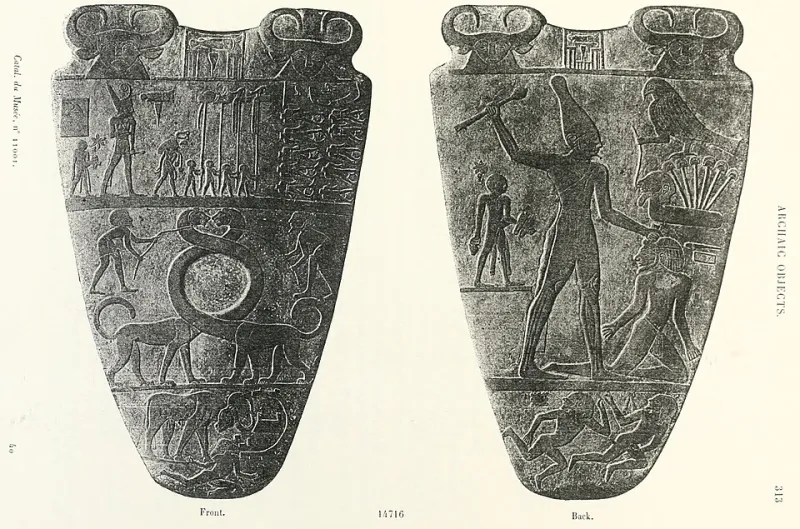
Photo: James Quibell, Public domain, via Wikimedia Commons
The Moment Before It Disappears
In February 2015, Islamic State militants entered the Mosul Museum in northern Iraq and systematically destroyed artifacts representing thousands of years of Assyrian and Akkadian civilization. Sledgehammers reduced ancient statuary to rubble. Drills defaced inscribed panels. The footage, released by the perpetrators themselves, traveled around the world in hours. Among those watching were archaeologists, curators, and technologists who had, in some cases, spent careers documenting exactly what was being destroyed.
What followed was not only grief. It was a reckoning with a question that the heritage community had been circling for years: if the physical object cannot be saved, what — if anything — can take its place?
The answer that has emerged over the past decade is provisional, contested, and technically remarkable. Using photogrammetry, LiDAR scanning, 3D modeling, and augmented reality platforms, researchers and institutions have begun constructing detailed digital reconstructions of destroyed, damaged, or threatened sites — from the temples of Palmyra in Syria to pre-contact earthwork complexes across the American Midwest. These efforts have produced genuine breakthroughs in preservation and public education. They have also opened a set of ethical debates that the field has not yet resolved.
What Digital Preservation Can Actually Do
The technical capabilities now available to heritage professionals are genuinely extraordinary. Photogrammetry — the process of generating three-dimensional models from overlapping two-dimensional photographs — can produce reconstructions of astonishing detail and accuracy when sufficient imagery exists. Researchers working with archival photographs of the Palmyra temple complex, for instance, were able to generate models precise enough to inform physical restoration efforts, despite the site's extensive wartime damage.
LiDAR scanning, which uses pulsed laser light to measure distances and generate point-cloud data, offers comparable precision for sites that can be physically accessed. When combined with ground-penetrating radar and multispectral imaging, these tools can document not only surface features but subsurface architectural elements that have never been fully excavated. The result, in optimal conditions, is a digital record more comprehensive than any previously achievable through conventional documentation methods.
For American audiences, the relevance of these technologies extends beyond distant conflict zones. Earthwork complexes associated with the Hopewell and Mississippian traditions — many of which have been partially or entirely destroyed by agricultural expansion and urban development — are among the sites now being reconstructed digitally from archival surveys, aerial photographs, and surviving physical remnants. Projects affiliated with institutions including the Smithsonian and several major research universities have produced interactive reconstructions that allow the public to experience these landscapes in ways that the surviving physical sites no longer permit.
The educational potential is significant. For communities whose access to physical sites is limited by geography, disability, or economics, a well-constructed digital reconstruction can serve as a meaningful point of engagement with heritage that would otherwise remain abstract.
The Questions That Technology Cannot Answer
Yet the digital reconstruction movement has attracted substantive criticism, and not only from skeptics of technology. Some of the most pointed objections come from within the archaeological and heritage communities themselves.
The first concern is epistemological. Every reconstruction involves interpretive choices. Where the physical evidence is incomplete — which, in the case of destroyed sites, it almost always is — modelers must make decisions about what to include, what to extrapolate, and what to leave unresolved. These decisions are not neutral. They reflect the assumptions, training, and cultural frameworks of the individuals and institutions making them. A reconstruction of a pre-contact ceremonial site produced without meaningful input from descendant communities may inadvertently encode misunderstandings or misrepresentations that, once rendered in vivid three-dimensional form, acquire an authority the underlying evidence does not support.
This concern is particularly acute in the United States, where the history of archaeology's relationship with Indigenous communities is fraught with exploitation and dispossession. Digital reconstructions of Native American sites produced by non-Native institutions, however technically accomplished, risk perpetuating a pattern in which outside experts define and control the representation of Indigenous heritage. Several tribal nations have begun asserting governance rights over digital documentation of sites within their ancestral territories — a development that reflects both the stakes involved and the inadequacy of existing legal frameworks for addressing them.
The second concern is more philosophical. There is a meaningful difference between an object and a record of an object, and the heritage community has not reached consensus on how to think about that difference in the digital context. When the Mosul artifacts were destroyed, their loss was irreversible not because no images existed, but because the physical objects themselves — with their weight, their texture, the specific marks left by the hands that made them — were gone. A digital model, however precise, does not restore what was lost. It documents the loss while providing a partial substitute for it.
Some scholars argue that this distinction matters enormously, and that framing digital reconstructions as forms of "preservation" obscures a more uncomfortable truth: that what is being preserved is information, not heritage in any fully meaningful sense. Others contend that this objection, while philosophically sound, risks becoming an argument for doing nothing in the face of ongoing destruction.
Governance, Access, and the Digital Archive
Perhaps the most pressing practical question concerns who controls the digital record and on what terms it is made available. Large-scale scanning and modeling projects require significant institutional resources, which means they are typically conducted by universities, museums, or technology companies — entities whose interests do not always align with those of the communities whose heritage is being documented.
Several high-profile projects have raised concerns about proprietary restrictions on digital heritage data. When a technology company holds the master files of a destroyed site's three-dimensional reconstruction, the community most affected by that site's loss may find itself dependent on corporate goodwill for access to its own history. The open-access movement in digital heritage is pushing back against this dynamic, but progress has been uneven.
What is clear is that the emergence of digital reconstruction as a significant force in heritage preservation demands new thinking about governance, consent, and the ethics of representation — thinking that must involve not only technologists and archaeologists but the communities whose pasts are at stake. The tools for rebuilding lost worlds in digital space are now available. The harder work is deciding who gets to rebuild them, and for whom.