Amateurs at the Trench: The Promise and Peril of Public Participation in Archaeological Discovery
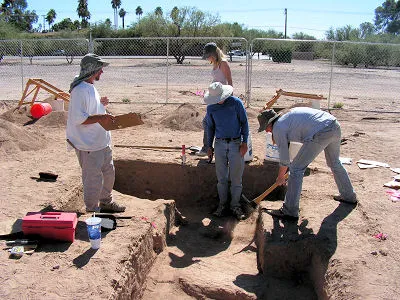
Photo: volunteer archaeologist metal detector artifact discovery field excavation community, via www.oldpueblo.org
On a Saturday morning in rural Virginia, a retired schoolteacher with a metal detector and a weekend to spare walked a recently plowed field on a neighbor's property and pulled a corroded copper token from six inches of topsoil. She photographed it, recorded its GPS coordinates, and submitted the images to a regional archaeological survey program before the afternoon was out. Within a week, a professional archaeologist had identified the object as a seventeenth-century trade token consistent with early colonial commerce along the Chesapeake — the first such artifact recovered from that county.
That sequence of events, replicated in varying forms across dozens of states every year, captures both the extraordinary potential and the genuine complexity of what has come to be called citizen archaeology. The democratization of discovery — enabled by affordable detection equipment, satellite mapping applications, online reporting platforms, and a growing network of community excavation programs — is producing finds that no institutional survey budget could have generated. It is also generating a set of ethical, legal, and methodological challenges that the profession is still working to address.
A Movement Gaining Ground
Public participation in archaeological fieldwork is not new. Community members have contributed labor to excavations since the discipline's earliest days, and many professional archaeologists trace their careers to a childhood spent digging in a backyard or volunteering on a local dig. What has changed in the past two decades is the scale, the organization, and the technological sophistication of non-professional engagement.
Platforms such as DigVentures, which coordinates crowdfunded community excavations in the United Kingdom, and the Archaeology Conservancy's network of volunteer programs in the United States have demonstrated that structured public participation can yield scientifically credible results. The Passport in Time program, administered through the U.S. Forest Service, has enrolled tens of thousands of volunteers in federally sanctioned excavations on public lands since its founding in the 1990s, producing a body of work that professional archaeologists have incorporated directly into peer-reviewed research.
Metal detecting, long viewed with suspicion by much of the archaeological establishment, has undergone a partial rehabilitation in the eyes of some researchers. In England and Wales, the Portable Antiquities Scheme — a voluntary reporting system that has catalogued more than 1.5 million finds submitted by members of the public — has generated a dataset of extraordinary breadth, enabling spatial analyses of artifact distribution that would have been impossible through professional survey alone. American archaeologists watching that program have begun advocating for comparable frameworks domestically, where no equivalent national reporting infrastructure currently exists.
The Finds That Changed the Record
The significance of amateur contributions to archaeological knowledge is not merely theoretical. In 2012, a fossil hunter in Colorado identified bone fragments that professional paleontologists subsequently confirmed as belonging to a mammoth bearing evidence of human butchery — pushing back the confirmed date of human activity in the region by several thousand years. In New Mexico, a rancher's report of unusual stone alignments on his property led to a professional survey that identified a previously undocumented pueblo site. Along the banks of the Columbia River in the Pacific Northwest, sport divers have recovered lithic artifacts from submerged contexts that have materially informed academic understanding of coastal migration routes.
These examples share a common thread: the discovery was made by someone without formal training, but the information was transmitted to professionals who had the methodological tools to interpret it responsibly. The handoff between amateur observation and professional analysis is, in many respects, the crux of the citizen archaeology question. When it functions well, the result is a genuine expansion of the evidentiary record. When it breaks down — when objects are removed from context, when sites are disturbed without documentation, when finds are sold rather than reported — the loss to scholarship can be irreversible.
The Ethics of the Unguided Dig
For all the genuine contributions of engaged and responsible citizen archaeologists, the field's professional community remains acutely aware of the damage that unregulated amateur activity can cause. Context is everything in archaeology. An artifact removed from the ground without precise documentation of its location, orientation, depth, and stratigraphic association loses a substantial portion of its interpretive value. The object itself may survive, but the information encoded in its relationship to surrounding materials — the spatial data that allows researchers to reconstruct patterns of use, deposition, and meaning — is gone.
The problem is compounded when financial incentives enter the equation. The market for pre-Columbian artifacts in the United States remains active despite federal prohibitions under the Archaeological Resources Protection Act of 1979 and the Native American Graves Protection and Repatriation Act of 1990. Sites on private land, which are not covered by federal protections in most circumstances, are particularly vulnerable to looting by individuals motivated more by profit than by curiosity. The distinction between a hobbyist who reports a find and a looter who sells it is legally and ethically significant, but the physical damage to a site may be identical.
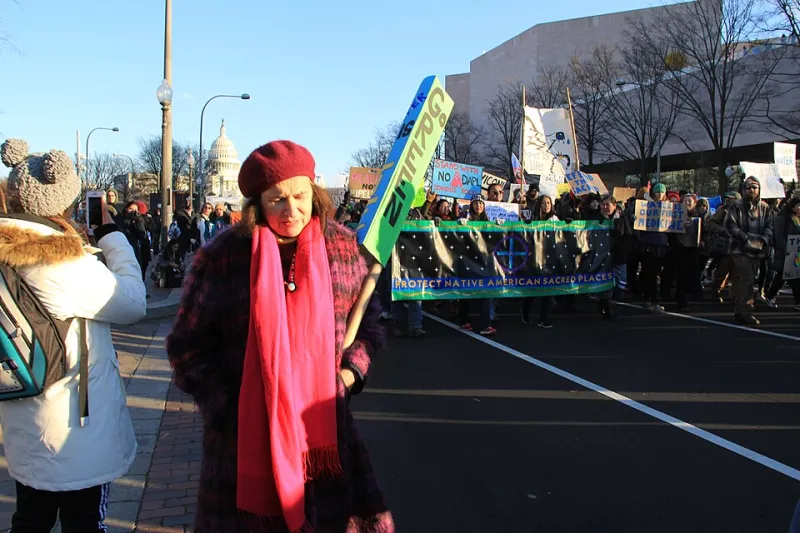
Indigenous communities, whose ancestral heritage is disproportionately implicated in many of these discoveries, have articulated concerns that extend beyond the question of artifact integrity. The excavation of burial sites, the handling of ceremonial objects, and the public dissemination of images depicting sacred materials are all issues that citizen archaeology programs must navigate with care. Several tribal nations have established formal protocols for engaging with amateur archaeologists operating on or near their traditional territories, and an increasing number of professional programs are building tribal consultation into their public participation frameworks from the outset.
"The enthusiasm is real, and it is genuinely valuable," observes one archaeologist who coordinates a community engagement program affiliated with a Midwestern state historical society. "What we ask of our volunteers is that they bring that enthusiasm into a framework built on respect — for the scientific process, for the communities whose history is at stake, and for the irreplaceable nature of what lies in the ground."
Building Bridges Between the Enthusiast and the Expert
The most productive models of citizen archaeology are those that treat public participants not as a labor pool to be managed but as genuine collaborators whose observations, local knowledge, and geographic reach constitute real intellectual contributions. Programs that invest in training — teaching volunteers to recognize significant features, document finds with precision, and report through established channels — consistently produce more reliable data than those that simply direct participants to dig.
Digital tools have substantially lowered the barrier to meaningful participation. Mobile applications that allow users to photograph and geolocate surface finds, submit them to institutional databases, and receive feedback from professional reviewers are operational in several states. Community mapping initiatives, in which local residents contribute observations about landscape features, erosion patterns, and historical land use, have helped professional teams prioritize survey areas and avoid disturbing sensitive deposits inadvertently.
The broader challenge is cultural as much as logistical. Professional archaeology, like many academic disciplines, has historically been protective of its methodological boundaries — understandably so, given the stakes involved. Opening those boundaries to public participation requires a degree of institutional flexibility that does not come naturally to every program. But the evidence increasingly suggests that the discipline's capacity to document and preserve the archaeological record — never adequate to the scale of the task — is meaningfully extended by the eyes, the energy, and the local presence of an engaged public.
The Fire That Public Interest Ignites
There is, at the core of citizen archaeology's appeal, something worth honoring: a widespread human desire to connect with the deep past, to hold in one's hand an object made by someone who lived centuries or millennia ago and to feel, however briefly, the weight of that continuity. That impulse is not a threat to the discipline. Channeled responsibly, it is among the most powerful forces available to those who believe that understanding the ancient world is a shared cultural obligation, not the exclusive province of the credentialed few.
The retired schoolteacher in Virginia has since completed a formal volunteer training program and now assists with a regional survey project every summer. Her copper token sits in a museum collection, properly catalogued and available to researchers. The field where she found it has been added to the state's archaeological site registry.
The past, it turns out, is not always best served by keeping it at a professional distance.