Ash and Ink: The Slow Erasure of the Ancient World's Greatest Repositories of Knowledge
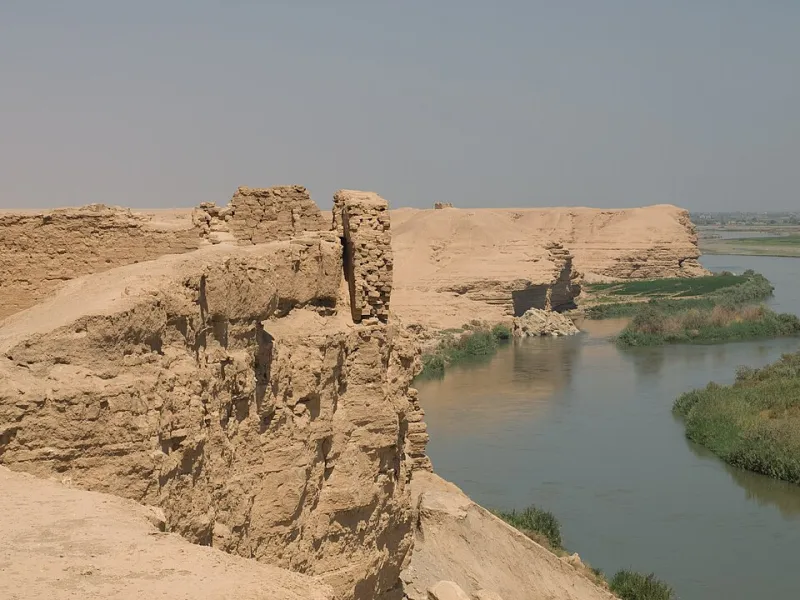
Photo: Marsyas, CC BY-SA 3.0, via Wikimedia Commons
There is a particular kind of grief that attaches to lost knowledge — a mourning not for people or places, but for the ideas, histories, and observations that existed once and will never exist again. Nowhere is that grief more keenly felt than in the study of the ancient world's great libraries, institutions whose destruction represents one of the most consequential cultural catastrophes in human history. And yet, as scholars are increasingly discovering, the story of those losses is more complicated — and, in certain respects, more hopeful — than the familiar narratives suggest.
The Libraries We Think We Know
No ancient library occupies more space in the popular imagination than the Library of Alexandria. Founded in Ptolemaic Egypt during the third century BCE, it was conceived as a universal repository — a place where every text in the known world might eventually be housed, translated, and studied. At its height, the Library may have contained hundreds of thousands of scrolls, representing works of Greek philosophy, Egyptian science, Babylonian astronomy, and much else besides.
The story most Americans encounter is that the Library was burned — either by Julius Caesar's forces in 48 BCE, or by a Christian mob in the fourth century CE, or by Arab conquerors in the seventh century. The reality is both less dramatic and more dispiriting. The Library did not perish in a single catastrophic blaze. It declined gradually, starved of funding, diminished by political instability, and eroded by the simple passage of time. Scrolls deteriorated. Scholars departed. The institution that had once drawn the greatest minds of the Mediterranean world became, over centuries, a shadow of itself.
This distinction matters because it shifts the moral weight of the loss. A fire assigns blame to a single actor, a single moment. A slow institutional decline implicates a society's changing priorities — its decisions about what knowledge is worth preserving and at what cost.
Nineveh: The Library That Survived by Burning
If Alexandria's fate is a cautionary tale about neglect, the Royal Library of Ashurbanipal at Nineveh offers a stranger story: a library that was, in a sense, preserved by the very destruction that should have obliterated it.
Assembled by the Assyrian king Ashurbanipal in the seventh century BCE, the library at Nineveh contained more than 30,000 clay tablets inscribed in cuneiform — records of royal correspondence, religious ritual, astronomical observation, medical practice, and literary tradition. Among them were tablets bearing the Epic of Gilgamesh, one of the oldest surviving works of narrative literature in human history.
When Nineveh fell to a coalition of Babylonian and Median forces in 612 BCE, the palace complex was burned. The tablets, fired by the same flames that destroyed the building around them, were effectively baked into permanence. Nineteenth-century excavations by British archaeologist Austen Henry Layard and his successors recovered thousands of these tablets, many of which now reside in the British Museum in London — a fact that itself raises pointed questions about cultural heritage, colonial collecting, and the ethics of repatriation that this publication has addressed elsewhere.
The survival of the Nineveh tablets is, paradoxically, among the best-documented cases of ancient textual preservation. It is also a reminder that what we know of the ancient world is shaped as much by the accidents of destruction as by the intentions of those who created the record.
Pergamon and the Politics of Knowledge
Less familiar to American audiences than Alexandria or Nineveh, the Library of Pergamon in what is now western Turkey was, at its height, considered a rival to Alexandria itself. Founded under the Attalid dynasty in the second century BCE, it reportedly housed some 200,000 scrolls and was celebrated throughout the Hellenistic world as a center of scholarship.
Pergamon's fate intersects with one of antiquity's more remarkable acts of cultural rivalry. According to the Roman writer Pliny the Elder, Egypt — alarmed by Pergamon's growing intellectual prestige — imposed an embargo on papyrus exports, effectively cutting off the library's primary writing material. The Pergamenes responded by developing a refined animal-skin writing surface that we now call parchment, a word derived from the city's Latin name, Pergamum. Whether or not the embargo story is strictly accurate, parchment's eventual displacement of papyrus as the dominant writing medium of the Western world represents one of the more consequential unintended consequences in the history of information technology.
The Library of Pergamon was ultimately donated to Alexandria by Mark Antony, according to ancient sources, though modern historians debate the details. What is not in dispute is that the physical site of Pergamon — today the Turkish city of Bergama — remains an active area of archaeological investigation, and that excavations there continue to yield inscriptions and architectural evidence that refine our understanding of how ancient libraries actually functioned as institutions.
What Technology Is Recovering
For scholars working today, the losses represented by these institutions are not merely historical abstractions. They are active research problems, and modern technology is providing tools that previous generations could not have imagined.
The Herculaneum scrolls — carbonized by the eruption of Vesuvius in 79 CE and long considered too fragile to unroll — have become a landmark case in digital recovery. The Vesuvius Challenge, a collaborative project launched in 2023 and drawing participants from across the United States and Europe, used X-ray computed tomography combined with machine learning to detect ink traces within scrolls that cannot be physically opened. In late 2023, the project's first substantial text was successfully decoded: a philosophical treatise on the experience of pleasure, written in Greek. The recovery was celebrated across the scholarly community as proof of concept for a method that may eventually unlock hundreds of additional texts.
Multispectral imaging, similarly, has transformed the study of palimpsests — manuscripts in which earlier texts were scraped away and overwritten, a common practice in medieval scriptoria working with scarce parchment. The Archimedes Palimpsest, a Byzantine prayer book that concealed previously unknown works by the ancient Greek mathematician, was subjected to intensive multispectral analysis beginning in the late 1990s, revealing text invisible to the naked eye. The recovered works included Archimedes' Method of Mechanical Theorems, a text that had been entirely unknown to modern scholars.
The Ethical Stakes of Preservation
These technological advances are genuinely exciting, but they also surface uncomfortable questions about stewardship and access. A significant proportion of the ancient texts that survive do so in collections assembled during the colonial era, held by institutions in the United States and Europe rather than in the countries of origin. The Iraqi government has long sought the return of cuneiform tablets held abroad, a claim that intersects with ongoing debates about the looting of archaeological sites during and after the 2003 invasion — a crisis that resulted in the loss of irreplaceable objects from the Iraq Museum in Baghdad.
For American institutions in particular, the question of what obligations accompany the possession of ancient knowledge is not merely academic. Museums and universities that hold ancient manuscripts, tablets, and papyri are increasingly being asked to demonstrate not just that they can preserve these materials, but that they have the moral standing to do so.
The ancient libraries were lost through a combination of violence, neglect, political calculation, and sheer bad luck. The challenge facing contemporary institutions is to ensure that the fragments we have recovered are not lost again — and that the communities whose ancestors created them have a meaningful voice in how that stewardship is conducted.
The ashes of Alexandria, Nineveh, and Pergamon are a warning. Whether we have learned to read them remains an open question.