Seven Sacred Fires That Still Defy Explanation
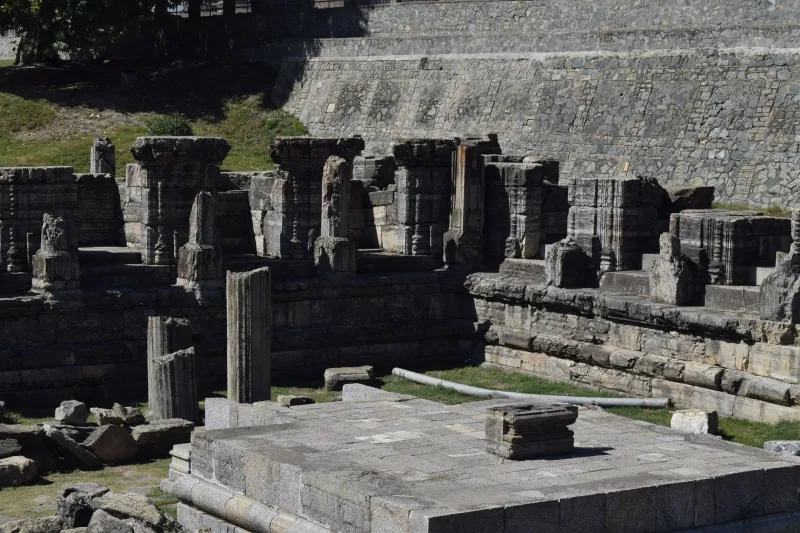
Fire occupies a strange position in the archaeological record. It destroys, yet it preserves. It is universal, yet the meanings attached to it were profoundly local. When excavators uncover a hearth, they face an immediate interpretive fork: was this fire practical — for cooking, warmth, craft — or was it sacred? Often, the evidence refuses to say. What follows are seven fire-centered traditions from the ancient and pre-colonial world, each anchored by real excavated evidence, and each still holding its secrets close.
1. The Eternal Flames of Zoroastrian Iran
Zoroastrianism is the world's oldest continuously practiced fire-centered religion, and its fire temples — from the Achaemenid era through Sasanian Persia — are among archaeology's most architecturally distinctive religious sites. At sites like Takht-e Soleyman in Iran, a Sasanian temple complex built around a natural gas vent, the sanctity of flame was monumentalized in stone.
The puzzle: the exact consecration practices and the ritual protocols surrounding the eternal fires are known largely from later textual sources. How early these practices date, and how the earliest temples functioned day to day, remains contested. Excavated ash deposits could answer many questions — if researchers can distinguish ritual ash from ordinary fuel debris.
2. Mississippian Platform Fires of the American Southeast
At Cahokia and other Mississippian centers, excavations have revealed carefully constructed fire basins on platform mounds, some containing layered deposits of ash, burned cedar, and specialized ceramics. Cedar, with its rot-resistant wood and aromatic smoke, appears repeatedly in ritual contexts across the Southeast.
The puzzle: were these fires continuously maintained, periodically relit, or burned only at moments of renewal? The stratigraphy suggests episodic events rather than eternal flames, but the ceremonial calendar that governed them is lost. Descendant nations hold oral traditions that speak to fire's role in town life; archaeology can confirm the physical record but not the meaning behind it — a boundary ethical practice requires researchers to respect.
3. Kiva Hearths of the Ancestral Puebloans
Nearly every excavated kiva in the Four Corners region contains a fire pit, typically positioned along the north-south axis beneath the sipapu — the symbolic opening to the underworld. Soot layers on kiva walls testify to generations of enclosed burning.
The puzzle: many kivas show evidence of deliberate, ritualized abandonment, including fires that burned objects at the moment a structure was sealed. What was being offered, to whom, and why some kivas were burned while others were carefully filled — these questions remain open. Modern Pueblo communities, who regard kivas as living tradition rather than relic, rightly shape how much interpretation is appropriate.
4. The Pyres of the Scythian Kurgans
The great burial mounds of the Eurasian steppe frequently contain evidence of elaborate fire rituals — burned wooden chambers, fumigated interiors, and in some cases cannabis seeds on heated stones, documented strikingly in the Pazyryk burials of Siberia.
The puzzle: purification by smoke is evident, but the cosmology driving it is reconstructed almost entirely from Herodotus, an outsider's account written at a distance. The gap between a Greek traveler's report and Scythian belief remains one of archaeology's more humbling chasms.
5. The Burned House Phenomenon of Neolithic Southeastern Europe
Across the Balkans and into the Cucuteni-Trypillia culture of Ukraine and Romania, archaeologists have documented hundreds of Neolithic settlements where houses were deliberately and thoroughly burned — often with complete ceramic assemblages and grain stores still inside.
The puzzle: accidental fires do not recur at this scale for two thousand years. House-burning appears ritualized, possibly marking the end of a dwelling's life cycle. But whether the fires were funerary, territorial, or something with no modern analogue is genuinely unknown.
6. The Fire-Clock of Chaco Canyon
The great houses of Chaco Canyon in New Mexico show evidence of very large hearths and extensive wood consumption — hundreds of thousands of trees hauled from distant mountains. Fires here were not merely domestic.
The puzzle: the relationship between fire, ceremony, and the famous solar and lunar alignments of Chacoan architecture is debated. Some researchers propose fires used as signal systems across the landscape; others see no evidence for it. The record, so far, supports both readings and settles on neither.
7. The Vestal Hearths of Rome
The Temple of Vesta in the Roman Forum housed a state flame whose extinction was believed to threaten the city itself. Excavations beneath the temple have revealed multiple rebuilding phases and evidence of an internal hearth — unusual for a Roman temple.
The puzzle: the temple's circular form and its origins predate Roman stone architecture, pointing to an institution older than the city's written memory. What the earliest Vestal fire actually meant to the Iron Age communities of the Palatine is unrecoverable from texts. The archaeology hints; it does not tell.
Why the Silence Matters
There is a temptation, in popular archaeology, to fill these gaps with confident storytelling. The more honest position — and the one increasingly adopted by the field — is to say where the record ends. In several of these cases, the most important interpreters are not archaeologists at all, but descendant and continuing communities whose traditions carry what the ash layers cannot. Fire, after all, was never just fuel. What it meant, in each of these seven worlds, may be the one thing the ground never gives back.