The Slow Burn Inside: How Climate Change Is Destroying What Museums Worked Centuries to Save
The most catastrophic threat to America's archaeological heritage may not be a bulldozer or a looter's shovel. It may be a malfunctioning HVAC unit in a museum basement that no one has inspected in three years.
While public discourse around preservation has long centered on excavation sites exposed to the elements, a quieter emergency is unfolding in the climate-controlled — or not so climate-controlled — storage rooms that house the bulk of this country's collected archaeological record. Conservators, collections managers, and preservation scientists are raising urgent alarms: the infrastructure designed to protect artifacts from time is itself becoming a source of accelerated destruction.
What Lives in the Basement
The public rarely sees the full scope of what a museum holds. For every object displayed under gallery lighting, dozens — sometimes hundreds — of others reside in storage. These collections include organic materials of extraordinary fragility: woven textiles recovered from Ancestral Puebloan sites in the Southwest, carbonized cordage from Midwestern burial mounds, wooden tools retrieved from waterlogged Pacific Northwest contexts, and animal-hide garments excavated from the Great Plains. Each of these materials reached the museum as a survivor of millennia. What they were not necessarily designed to survive is the institutional neglect enabled by shrinking preservation budgets and aging building infrastructure.
According to the American Alliance of Museums, the United States is home to more than 33,000 museums, and many of them — particularly mid-sized regional institutions and university collections — operate storage facilities that date to the mid-twentieth century. These buildings were engineered for a climate that no longer exists.
A Warming World, an Unready Archive
Climate scientists have documented a consistent rise in average temperatures across most of the continental United States over the past four decades, accompanied by more volatile swings between humidity extremes. For the organic materials that make up a significant portion of archaeological collections, these fluctuations are not merely inconvenient — they are chemically destructive.
Textiles expand and contract with each humidity cycle, stressing fibers that may already be brittle after centuries in the ground. Wooden objects crack as moisture content shifts. Adhesives used in earlier conservation treatments — many of them applied decades ago with materials now considered obsolete — break down under thermal stress, causing fragments to separate or surface treatments to flake away. Metals corrode more rapidly in high-humidity environments, and the salts that naturally migrate to the surface of ceramics during repeated wet-dry cycles can cause spalling severe enough to obscure inscriptions or decorative elements entirely.
"What we're seeing is a compounding effect," said one conservator at a large Midwestern natural history museum who asked not to be identified by name due to institutional sensitivities. "The objects came in with existing vulnerabilities from their time in the ground. Now they're being subjected to environmental stress that their storage conditions were never designed to accommodate. The deterioration curve has steepened considerably in the last decade."
The Infrastructure Gap
The problem is not simply climatic — it is financial and institutional. Many of the storage facilities most at risk are located in regions where summer temperatures have risen most sharply: the Southeast, the interior Southwest, and parts of the Mid-Atlantic. Older buildings rely on centralized HVAC systems that were installed when energy was cheap and climate stability was assumed. Retrofitting these systems to maintain the tighter temperature and relative humidity tolerances that conservation science now recommends — typically between 45 and 55 percent RH and 65 to 70 degrees Fahrenheit — requires capital investment that most institutions do not have.
A 2022 report from the National Endowment for the Humanities noted that deferred maintenance across American cultural institutions had reached crisis proportions, with collections storage infrastructure among the most underfunded categories. Federal grant programs exist to address this gap, but they are competitive, slow-moving, and insufficient in scale relative to the need. Smaller institutions, including tribal cultural centers and university anthropology departments that hold significant archaeological collections, often lack the grant-writing capacity to compete effectively for available resources.
"We have objects that represent the only physical evidence of entire communities," said a collections manager at a university museum in the Southwest, speaking about a storage room where summer temperatures have regularly exceeded recommended thresholds during power outages. "When those objects are gone, they're gone. There is no second chance."
When Conservation Becomes Triage
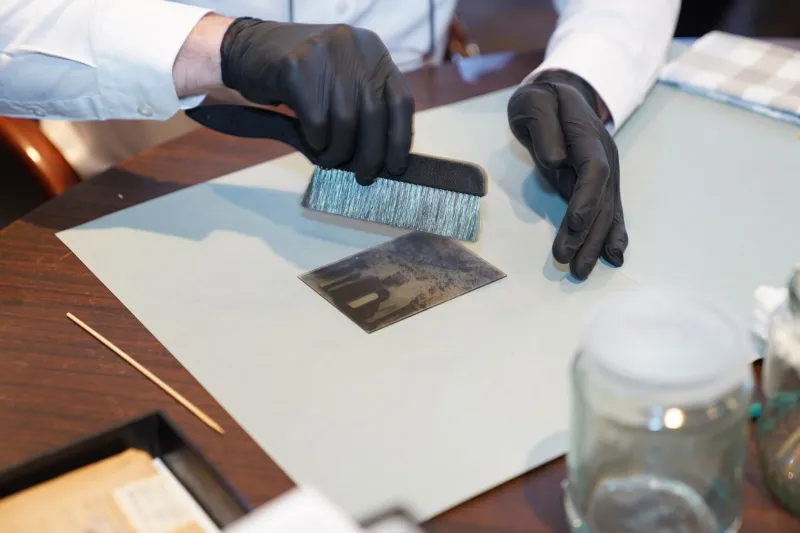
Faced with inadequate infrastructure and limited budgets, many conservators have been forced into a triage model — prioritizing the most vulnerable objects for immediate stabilization while accepting that others will continue to deteriorate. This means conducting condition surveys to identify items at acute risk, rehousing the most fragile materials in archival-quality enclosures with buffering capacity, and in some cases relocating entire sub-collections to better-equipped partner institutions.
Emergency stabilization strategies have grown increasingly creative. Some institutions have begun using passive humidity buffering systems — silica gel panels embedded in storage enclosures — to reduce the amplitude of fluctuation even when room-level climate control is inadequate. Others have invested in portable data loggers to build detailed environmental records, creating a baseline that allows conservators to identify the specific storage zones where conditions are most dangerous.
Digital documentation has also entered the toolkit as a form of last-resort preservation. High-resolution photogrammetric scans and multispectral imaging can capture surface detail and structural information from objects before further deterioration renders that data unrecoverable. But conservators are careful to note that a digital surrogate is not a preservation solution — it is a record of something that has been lost.
"Digitization is important," one conservator noted, "but it's not the same as preserving the object. The physical artifact carries information that no scan can fully replicate — the residues, the tool marks, the isotopic signatures. When we lose the object, we lose questions we haven't thought to ask yet."
Accountability and the Path Forward
The archaeological collections held in American museums were, in many cases, gathered under collecting practices that are now recognized as ethically problematic — excavated without community consent, removed from Indigenous homelands, catalogued and stored by institutions that claimed scientific authority over materials that belonged to living cultures. The current storage crisis adds a bitter dimension to that history: objects taken from communities in the name of preservation are now deteriorating in institutions that lack the resources to fulfill that stated purpose.
This reality has intensified conversations about repatriation, not only as a matter of cultural justice but as a practical preservation strategy. Several tribal nations have argued — with growing institutional support — that communities with deep cultural knowledge of their ancestral materials are better positioned to make informed decisions about their care and storage than under-resourced museums operating at the margins of their capacity.
For institutions committed to retaining and stewarding their collections, the path forward requires more than emergency repairs. It demands sustained federal investment in collections infrastructure, stronger professional standards for environmental monitoring, and honest institutional reckoning with the gap between preservation rhetoric and preservation reality.
The artifacts held in America's museum basements survived ice ages, migrations, conquests, and centuries of burial. Whether they survive the next fifty years of institutional neglect and climatic instability is a question that will be answered not by the earth, but by the choices made in conference rooms and budget cycles.
The fire, this time, is inside the archive.